
“I am among those who think that science has great beauty.”
Marie Curie
What if instead of hopping on another cruise ship, going to just another resort, or heading to all the tourist traps, you instead had a vacation that held meaning? A vacation where you get up close and personal to wilderness you’ve only ever seen in documentaries or in lecture halls?
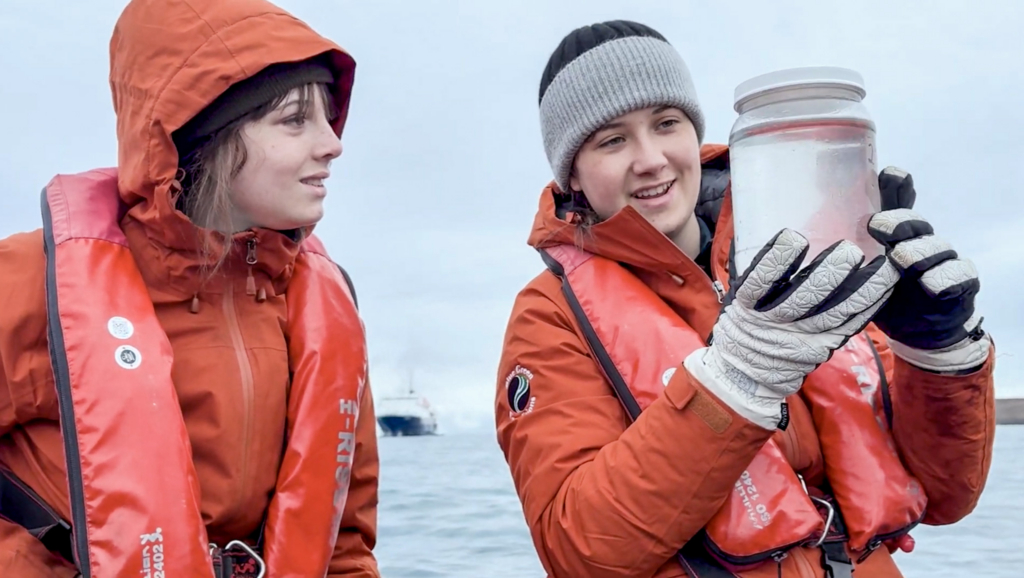

Normal vacations stop when you get home. These trips keep on going.


We are proud to be partnered with some of the world’s leaders in their respective fields. Whether it’s plants, animals, microscopic or massive, you’ll have the opportunity to not only learn about the issues that our planet is facing, but to play an active role in collecting the samples and data that are needed to keep these projects alive.
New Film: Invisible Empire
Our new film project is designed to highlight our efforts to rescue the ocean. Every rescue starts at the source, and the poles are the ocean’s source.
The water that circulates through every ocean on Earth begins its journey here. Cold, salty water sinks at the poles and creeps along the ocean floor for a thousand years, surfacing an ocean away, carrying oxygen, nutrients, and heat with it. It is, in effect, the ocean’s circulatory system — and like any circulatory system, what happens at its source determines what happens everywhere downstream. A fever doesn’t stay in the part of the body where it started. Neither does a change to the water that feeds every ocean on the planet.
That is the case the researchers in this film are making with their work, sample by sample: that a warming, changing polar ocean isn’t a regional problem. It’s an early warning system for the rest of the sea. The plankton blooms shifting in the Arctic and Antarctic don’t just affect polar food webs — they ripple through fisheries and ecosystems an ocean away, because the currents that carry them don’t stop at a border on a map. The ice that’s vanishing doesn’t just change the view from an expedition vessel — it changes sea level, ocean temperature, and weather patterns for coastlines that will never see a glacier in person.
This is why the scientists in Invisible Empire treat the poles as ground zero rather than a remote curiosity. It’s not that the rest of the ocean doesn’t matter — it’s that the poles are where you can still catch the problem early enough to matter. Get the data here, understand the mechanism here, and you have a chance to act before the same forces finish arriving everywhere else. Wait, and you’re no longer racing to prevent the damage — you’re just documenting it as it lands.
That urgency is what separates this project from a standard expedition film. The researchers aboard these vessels aren’t collecting samples to satisfy curiosity about a beautiful, remote place. They’re racing to build the case — with real measurements, real data, real evidence — before the window to act on what they find closes.
Latest Science Updates
-

Views from the Poles
We wanted to share a couple of stories from a couple of researchers on our recent trips to the poles! From Trevaughn Ellis, PhD candidate: My day job is working on boats around Puget Sound in Washington State, USA. As such, I’m used to seeing sleepy harbor seals and graceful seabirds. I’ve even had the…
-

Updates From the Field – Plankton Base
We are always happy to share the results of our scientific research! In fact, last year we launched a newsletter that participants can subscribe to receive every two months and stay up to date on the latest program news. In previous issues of this newsletter, we’ve already shared the results of my trip to the…
-

Updates From the Field – TreVaughn Ellis
I finally have some updates! It genuinely took me until late May to successfully extract the samples and I have finally got the sequencing data back and it looks good! In the upcoming days I will create a write up (and possibly a comic) of some of the trials, errors and some preliminary data! It’s…

